Is eating out in Japan really cheap, or does it only look that way on the menu? For many visitors from the United States, casual meals and lunches can feel surprisingly affordable—but that does not mean every restaurant in Japan is inexpensive. The biggest difference often appears in the final bill: Japanese restaurant prices are generally shown with consumption tax included, and tipping is neither expected nor customary at ordinary restaurants. Japan also offers a wide everyday range, from convenience-store meals and gyudon to bento and teishoku. This article explains how those factors shape the comparison, why the contrast can feel especially strong after New York, and when drinks, service charges, tourist areas, or upscale dining can change the picture.
The Short Answer: Everyday Meals Can Feel Surprisingly Affordable
Yes—casual dining and lunch in Japan can feel surprisingly affordable to visitors used to restaurant bills in the United States. This is especially true for everyday options such as rice bowls, noodles, curry, bento, and set meals.
After living in New York, I found the contrast particularly noticeable. An ordinary meal in Japan often felt much less expensive than what I had become accustomed to paying there. However, New York is a relatively costly point of comparison, and this personal impression should not be treated as proof that every meal in Japan is cheaper than its equivalent everywhere in the United States.
The answer ultimately depends on where and how you eat. Casual restaurants can offer good value, but fine dining, meals with several alcoholic drinks, and restaurants in tourist-oriented areas may produce a much higher bill. Japan is not uniformly cheap; rather, it offers many practical, lower-cost choices for everyday dining.
Why the Price on the Menu Is Usually Close to What You Pay
At most consumer-facing restaurants in Japan, menu prices are displayed with consumption tax included. A meal listed at ¥1,000 will therefore usually cost ¥1,000 at the register, provided you have not ordered anything extra. Some menus show both pre-tax and tax-inclusive figures, so check which number is labeled as the total price. Takeout and dine-in prices may also differ because different consumption-tax rates can apply.
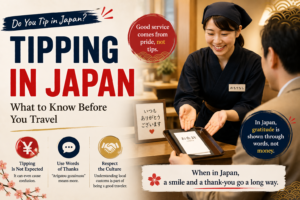
Tipping is generally neither expected nor customary at ordinary Japanese restaurants. It is not legally prohibited, but customers normally pay the bill without adding a percentage for the server. From a budgeting perspective, this makes the final amount relatively easy to anticipate.
The checkout experience can be quite different in the United States. A restaurant may list a price before local sales tax, and at a full-service restaurant the customer will usually add a customary tip as well. The amount ultimately paid can therefore be substantially higher than the menu price.
For a meaningful comparison, look at the final total, not just two listed prices. A Japanese meal and a US meal may appear similarly priced on their menus, yet the Japanese bill can still feel less expensive because tax is generally already included and no tip is normally added. This difference between the advertised price and the amount paid is one reason eating out in Japan can feel more affordable than a menu-only comparison suggests.
Lunch Is Where Japan’s Range of Prices Becomes Most Visible
Lunch in Japan offers a broad ladder of prices and service styles. Depending on your budget and schedule, you might pick up a meal at a convenience store, buy a prepared bento, stop for gyudon, noodles, or curry, or sit down for a restaurant lunch set. Eating lunch out does not always mean paying for a full-service restaurant experience.
Teishoku, or set meals, can be particularly easy to evaluate. A set typically combines a main dish—such as grilled fish, fried chicken, or pork cutlet—with rice, soup, and one or more side dishes. Other restaurants offer lunch combinations that similarly bundle several items for one clearly stated price.
The advantage is not that every lunch is exceptionally cheap. Rather, several practical price and service levels are part of everyday life, making it easier to adjust spending from one day to the next. A quick bowl meal may suit a busy weekday, while a more substantial set meal provides variety without requiring a special occasion.
Keep in mind that lunch menus are often limited by time. A restaurant’s affordable set or special may end in the afternoon, and ordering at the same place for dinner can cost more. When estimating your food budget, treat lunch and dinner as separate categories rather than assuming the same prices apply all day.
Why the Difference Feels Especially Large After New York
Living in New York reset my sense of what an ordinary restaurant meal costs. I became accustomed to the city’s high after-tax, after-tip bills, so casual meals in Japan felt markedly more affordable—even when their prices were not exceptionally low in isolation. The contrast reflected not only Japanese prices but also the high baseline shaping my expectations.
This is personal context, not a comparison between Japan and the United States as a whole. Someone arriving from a lower-cost US region may notice a smaller difference. Perceptions of value also depend on whether the meals are genuinely comparable in portion size, included dishes, and level of service.
Restaurant Type Matters More Than a Single National Average
A single “average restaurant meal” can be misleading because different types of restaurants follow very different pricing patterns.
| Restaurant type | Typical pricing pattern |
|---|---|
| Fast-casual chains | Inexpensive single dishes such as beef bowls, curry, or noodles, with limited table service |
| Neighborhood lunch spots | Set meals or daily specials designed for routine dining |
| Family restaurants | Moderately priced meals with broad menus; drinks, desserts, and side dishes are often ordered separately |
| Izakaya | Multiple small dishes and alcoholic drinks, so the total depends heavily on how much the group orders |
| High-end restaurants | Premium ingredients, elaborate preparation, and course menus can make the bill considerably higher |
This is why a low-cost bowl meal in Japan should not be compared directly with a sit-down dinner in the United States that includes appetizers, drinks, dessert, and full table service. The restaurant format, portion size, and contents of the meal need to be reasonably similar for the comparison to be useful.
Even at a moderately priced restaurant, alcohol, desserts, premium meat or seafood, and several shared dishes can quickly increase the total. Rather than relying on one national average, travelers should look at representative costs by meal type—such as a quick bowl meal, a set lunch, an izakaya evening, or an upscale course dinner.
Tokyo Is Not Always Dramatically More Expensive for Everyday Food
In my experience, the difference in everyday meal prices between Tokyo and regional areas is often less striking than the difference in rent. Tokyo can certainly be expensive, but moving beyond the capital does not automatically make every restaurant meal much cheaper.
One reason is that national chains often use identical or similar pricing across much of Japan. Standardized meals such as beef bowls, curry, noodles, and family-restaurant dishes may therefore cost roughly the same in many cities. This can narrow the regional gap for routine dining.
However, food prices are not uniform nationwide. Independent restaurants set their own prices, while busy tourist districts, resort towns, and remote areas may be more expensive than expected. Local specialties and ingredients can also command a premium. Tokyo itself contains both inexpensive neighborhood options and costly dining districts, so location within a city can matter as much as the city’s name.
Extra Charges and Situations That Complicate the Simple Answer
A few types of restaurants may add charges beyond the food you deliberately order. At many izakaya, for example, customers receive a small appetizer called an otoshi and are charged a modest amount per person. It functions much like a table or seating charge, even though the dish was not ordered directly. The charge may be listed on the menu or explained near the entrance, but it is easy for first-time visitors to overlook.
Upscale restaurants and hotel dining rooms may also add a service charge to the bill. This is separate from tipping and does not mean that customers are expected to leave additional cash. Some venues may also impose cover charges or fees for special seating.
Drinks can have an even greater effect on the total. Several rounds of alcohol, premium beverages, desserts, or multiple small dishes at an izakaya can turn an apparently inexpensive meal into a costly evening. Restaurants in major tourist districts may also have higher base prices.
These cases qualify the general pattern rather than overturning it. Pricing at ordinary restaurants is usually straightforward, but it is sensible to check for notes such as otoshi, table charges, service charges, minimum orders, or seating fees before ordering.
How to Judge Whether Eating Out Will Be Cheap for You
Base your budget on the meals you actually buy, rather than on a single “average” food cost. Compare a quick lunch at home with a convenience-store meal, bowl dish, or lunch set in Japan; compare a full-service dinner with a similar restaurant experience.
When estimating your spending, ask:
- Will you mainly choose lunch sets or dinner courses?
- How often will you order alcohol, desserts, or extra dishes?
- Will you eat mostly at casual chains and neighborhood restaurants, or in tourist-oriented and upscale venues?
- Are you comfortable mixing inexpensive meals with occasional splurges?
A useful method is to plan a sample day—breakfast, lunch, dinner, drinks, and snacks—based on your normal habits. US visitors should compare the resulting Japanese totals with what they usually pay after sales tax and tip, not with US menu prices alone.
For travelers who favor casual meals and affordable lunches, eating out in Japan can be quite budget-friendly. Frequent drinking, premium ingredients, and upscale dining, however, can quickly reduce or eliminate that advantage.
Conclusion
Eating out in Japan can feel inexpensive by US standards, especially for casual meals and lunch. The clearest advantage is often not an exceptionally low menu price, but a predictable final bill: displayed prices generally include consumption tax, and tipping is not customary at ordinary restaurants.
Japan also offers a useful range of everyday choices, from convenience-store meals and gyudon to bento and teishoku. This makes it easier to balance quick, low-cost meals with occasional restaurant splurges. The contrast may feel particularly strong to someone accustomed to New York prices, though experiences will differ across the United States.
Ultimately, affordability depends more on dining habits and restaurant type than on a single national average. Compare equivalent meals using after-tax, after-tip US totals, and account for alcohol, dinner pricing, tourist locations, service or table charges, and upscale dining. For travelers who favor casual restaurants and lunch sets, Japan can be comfortably budget-friendly without being universally cheap.





Comments