Japanese Language– category –
-

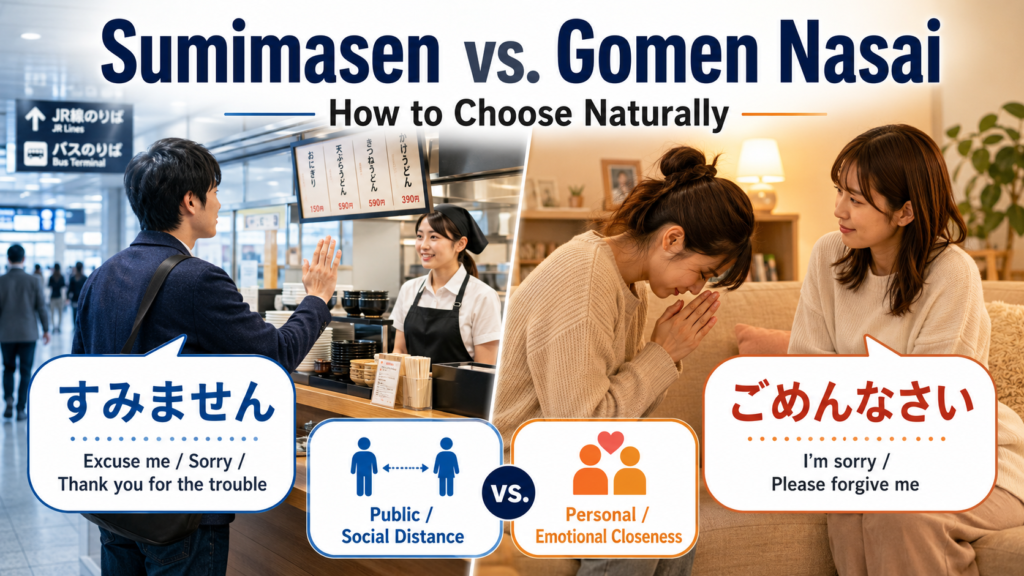
Sumimasen vs Gomen Nasai: How to Choose Naturally
Learn how Japanese speakers choose between sumimasen and gomen nasai by considering social distance, personal fault, inconvenience, gratitude, and workplace formality rather than translating both simply as “sorry.” -
What Does Otsukaresama Mean in Japanese Workplaces?
Learn how otsukaresama functions in Japanese workplaces—as a greeting, acknowledgment, conversational opener, or farewell—and why the best English translation depends on the situation. -
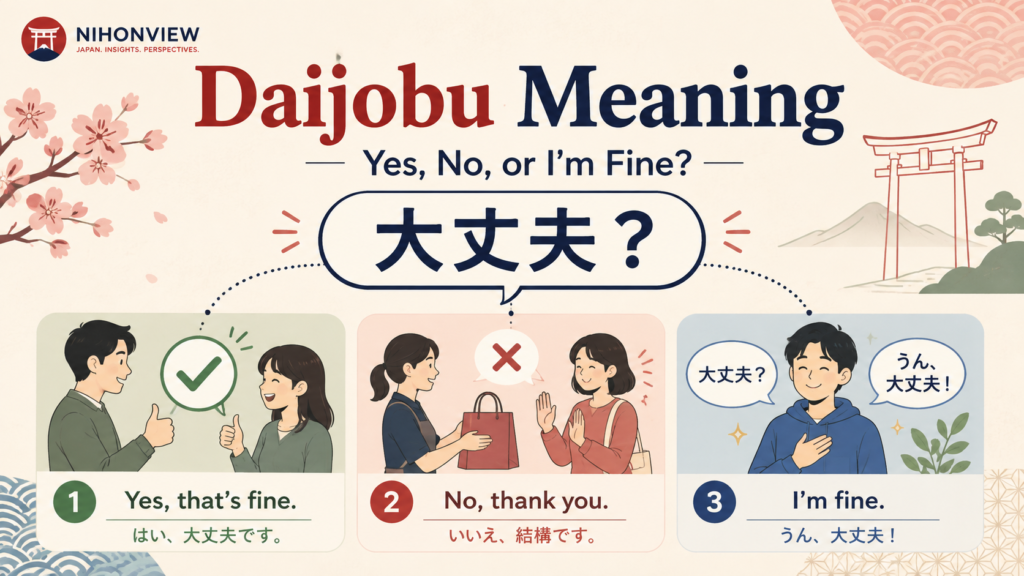
Daijobu Meaning: How It Can Mean Yes, No, or I’m Fine
Learn why daijobu is not inherently yes or no, how context determines its meaning, and when it naturally translates as “I’m fine,” “that’s okay,” or “no, thank you.” -
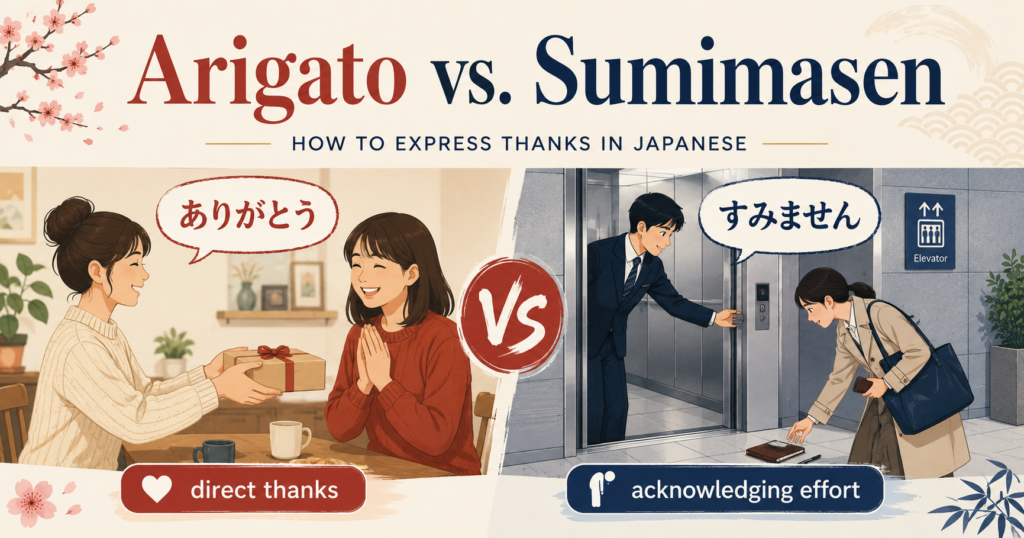
Arigato vs. Sumimasen: How to Express Thanks
Learn when Japanese speakers use arigato, sumimasen, or both to express gratitude, and how social distance, politeness, and the effort involved shape what sounds natural. -
Kawaii vs. Kirei: The Difference in Meaning and Use
Learn how kawaii and kirei frame attractiveness differently in everyday Japanese, how each affects compliments, and when kirei means clean or neat. -
Sayonara Meaning: Does It Mean “Goodbye Forever”?
Sayonara means “goodbye,” but it does not always mean goodbye forever. A native Japanese speaker explains its nuance and what people usually say instead. -
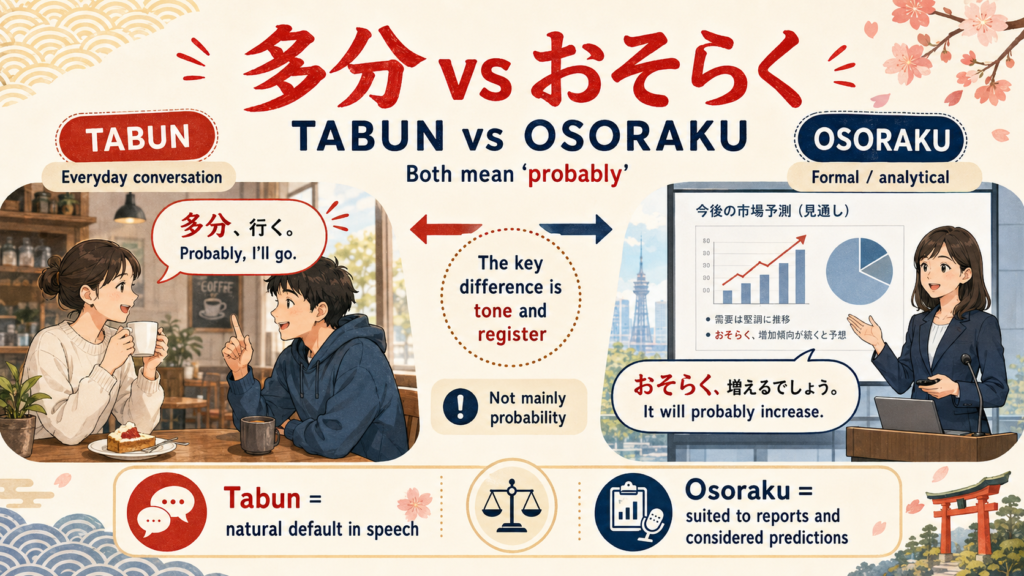
Tabun vs Osoraku: How to Say “Probably” in Japanese
Learn how 多分 (tabun) and おそらく (osoraku) differ in tone, formality, and everyday use, with natural examples and a practical guide to choosing the right word for “probably.” -
Why Japanese Speakers Say Sumimasen So Often
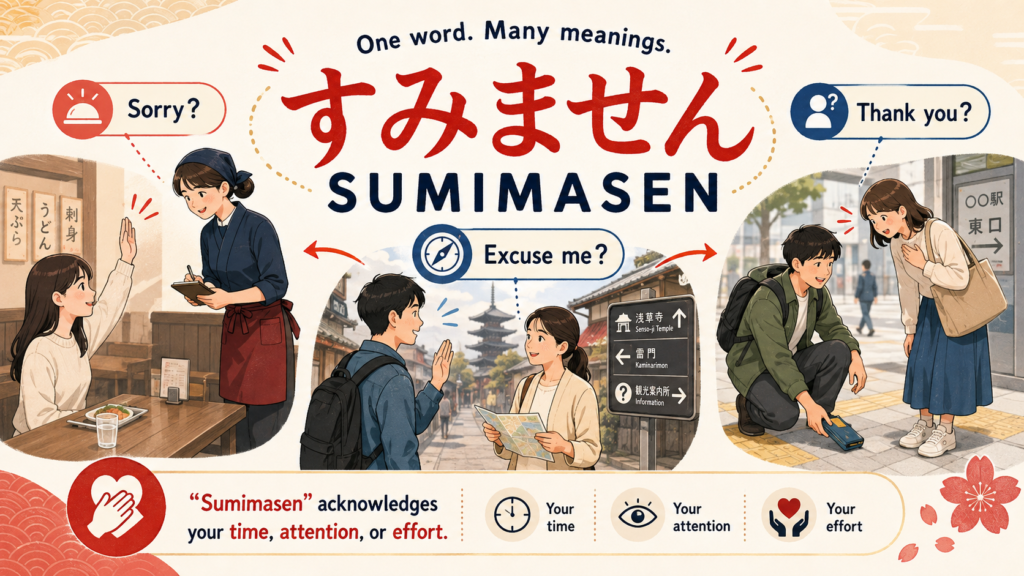
Sumimasen does more than apologize. Learn how Japanese speakers use it to say “excuse me,” acknowledge another person’s effort, express gratitude, and respond naturally in everyday situations.



12