August 2026– date –
-

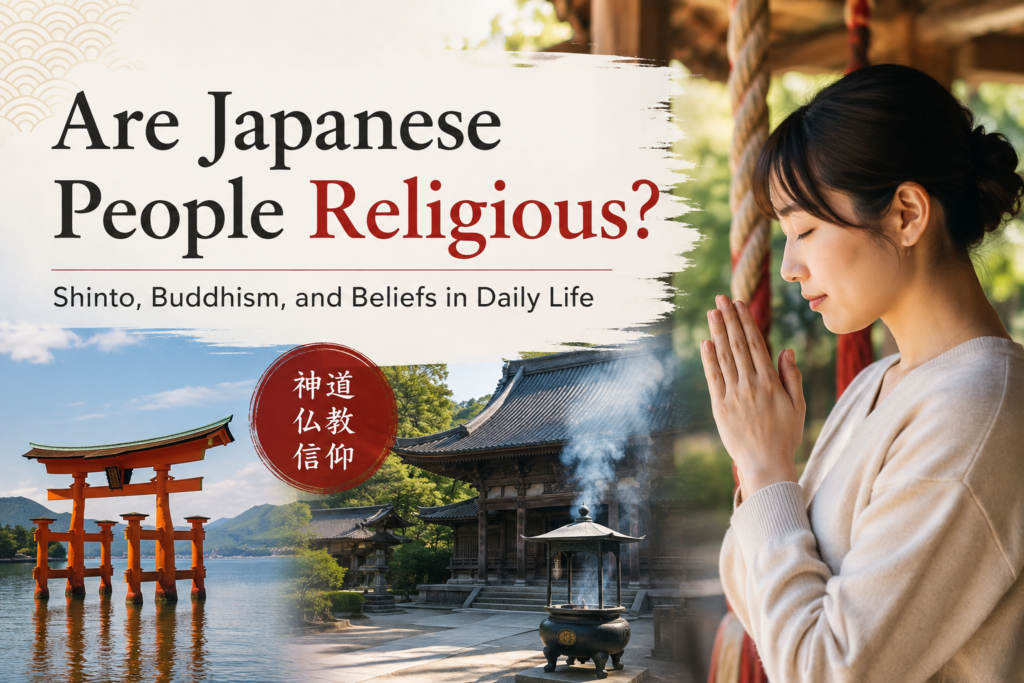
Are Japanese People Religious? Belief, Identity, and Custom
Learn why religious identity, personal belief, and everyday customs do not always align in Japan, from shrine visits and Buddhist memorial rites to family traditions and seasonal observances. -
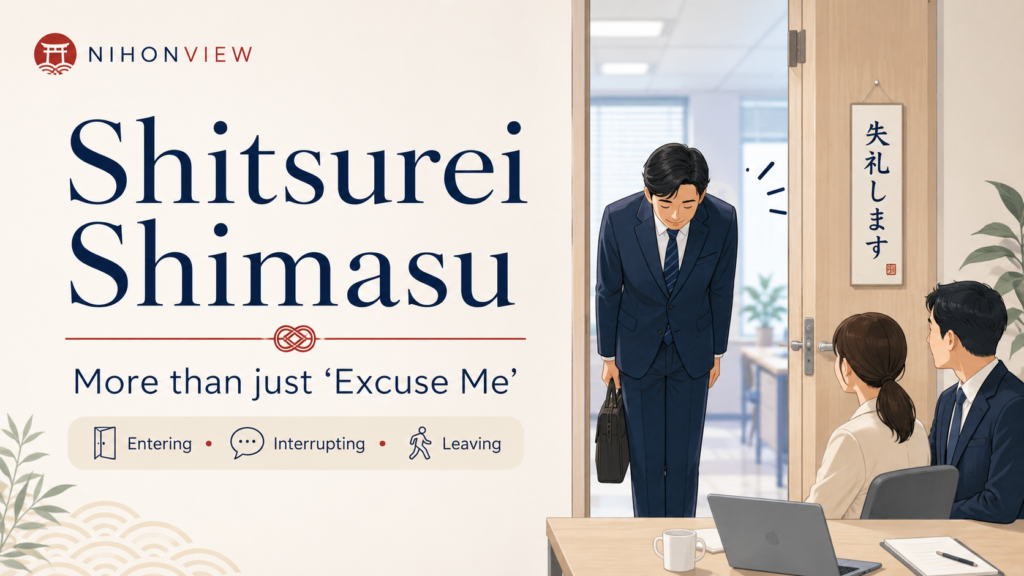
What Does Shitsurei Shimasu Really Mean in Japanese?
Learn why shitsurei shimasu means more than “excuse me,” and how Japanese speakers use it when entering, leaving, interrupting, or politely affecting another person’s space and attention. -
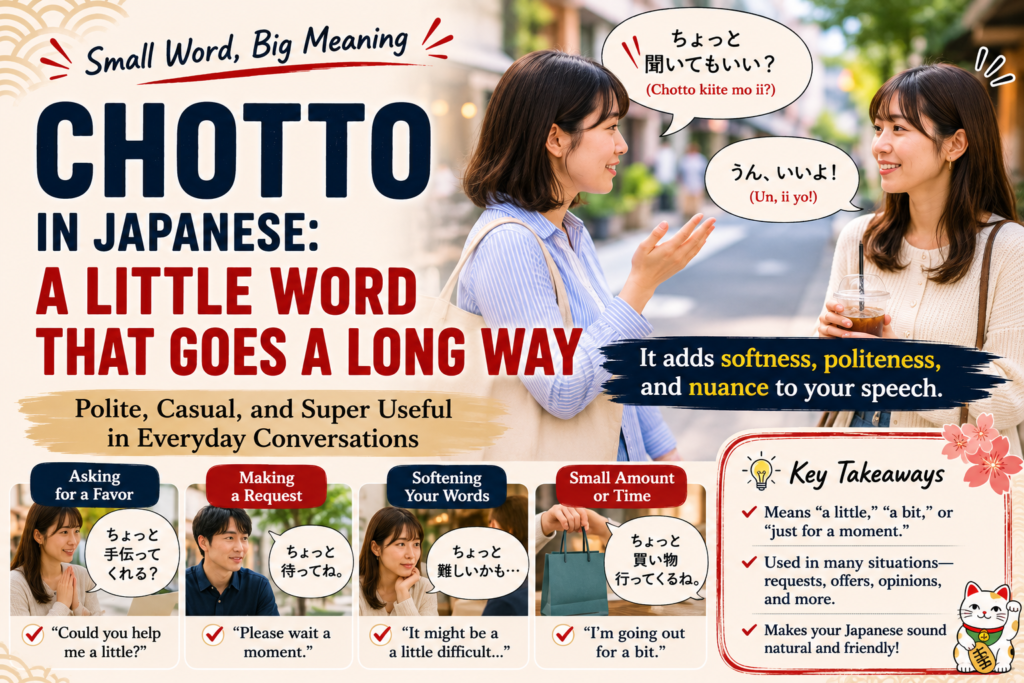
Does Chotto Mean No? Understanding Japanese Refusals
Learn why chotto can imply a polite refusal without literally meaning “no,” how Japanese listeners interpret tone, pauses, and unfinished sentences, and when learners should use a clearer response. -
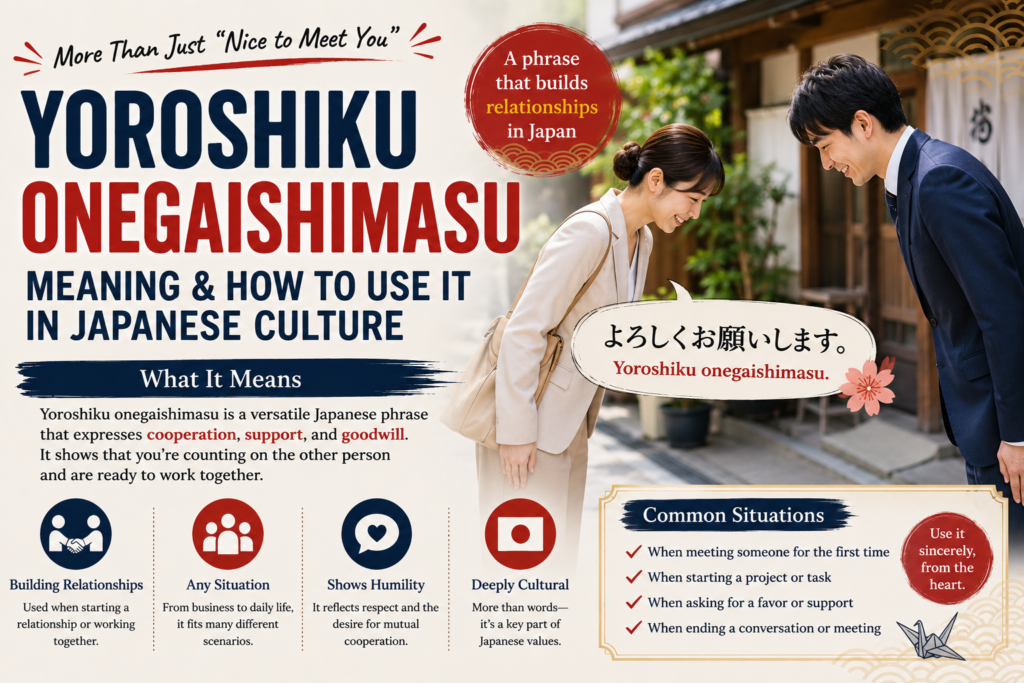
What Does Yoroshiku Onegaishimasu Really Mean?
Learn how yoroshiku onegaishimasu changes with context, from introductions and requests to workplace cooperation, and how to choose natural English based on what is expected to happen next. -
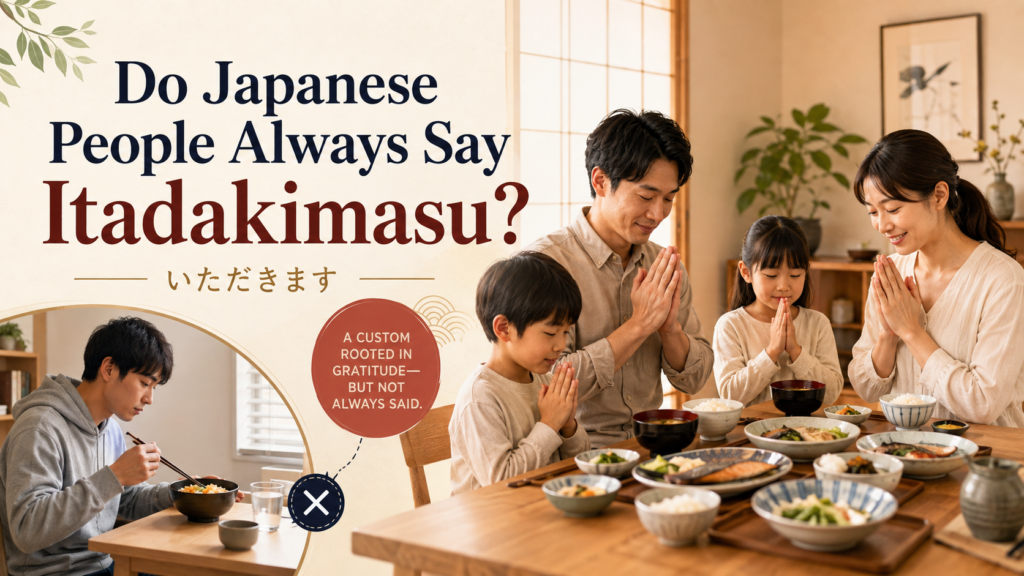
Do Japanese People Always Say Itadakimasu Before Eating?
Learn when Japanese people say itadakimasu, why they may skip it when eating alone, how shared meals shape its use, and why “thank you for the food” is an incomplete translation. -
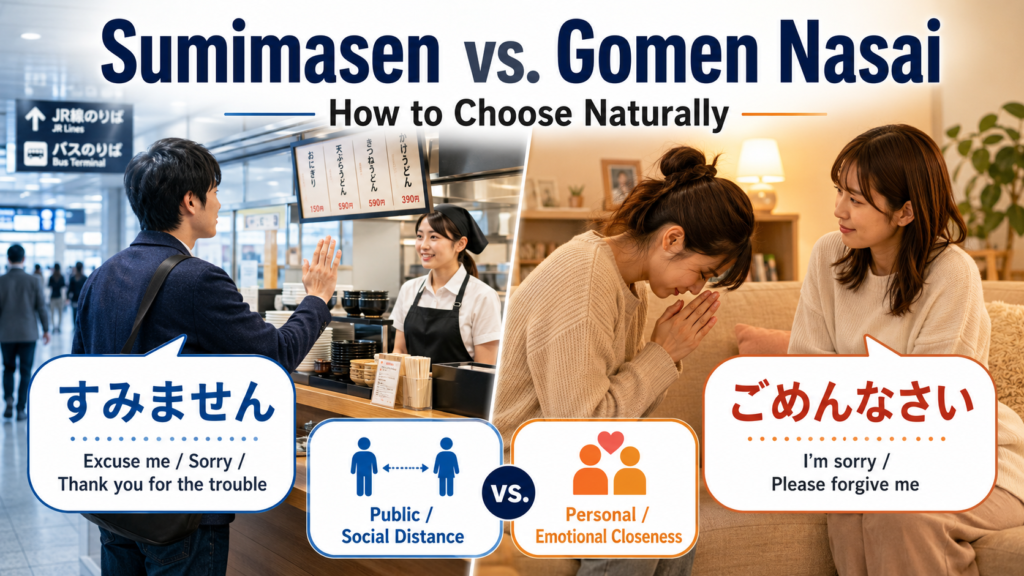
Sumimasen vs Gomen Nasai: How to Choose Naturally
Learn how Japanese speakers choose between sumimasen and gomen nasai by considering social distance, personal fault, inconvenience, gratitude, and workplace formality rather than translating both simply as “sorry.” -
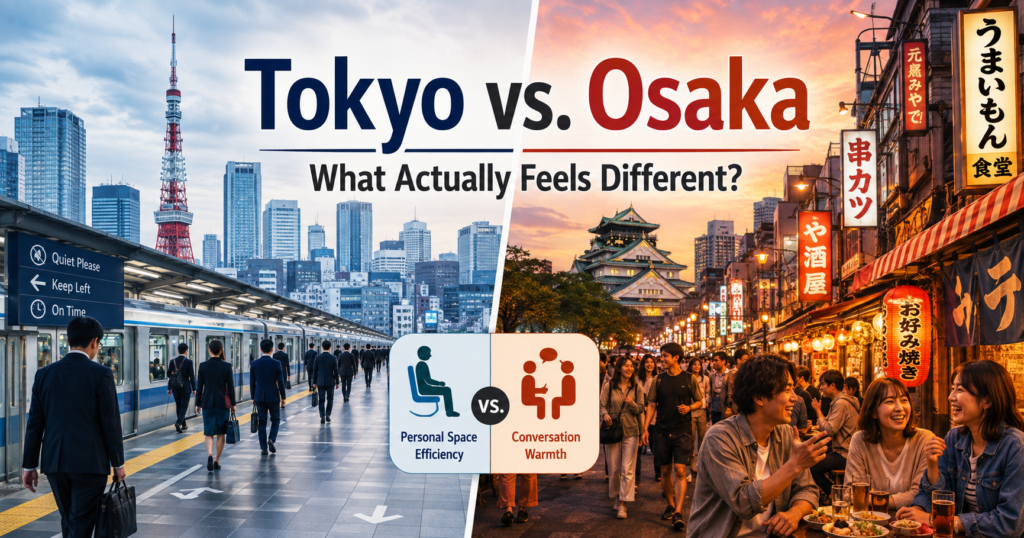
Tokyo vs. Osaka: What Actually Feels Different?
Explore, from a Japanese perspective, how Tokyo and Osaka differ in social distance, communication, service, transportation, and local identity, with practical guidance for travelers and prospective residents.